Three small islands, a name that means 'The Chickens', and a legend older than Rome. The Li Galli Islands — once the home of Homer's Sirens — are the most enchanted stretch of sea between Positano and Capri, and the one place on the Amalfi Coast that can only truly be experienced from the water.
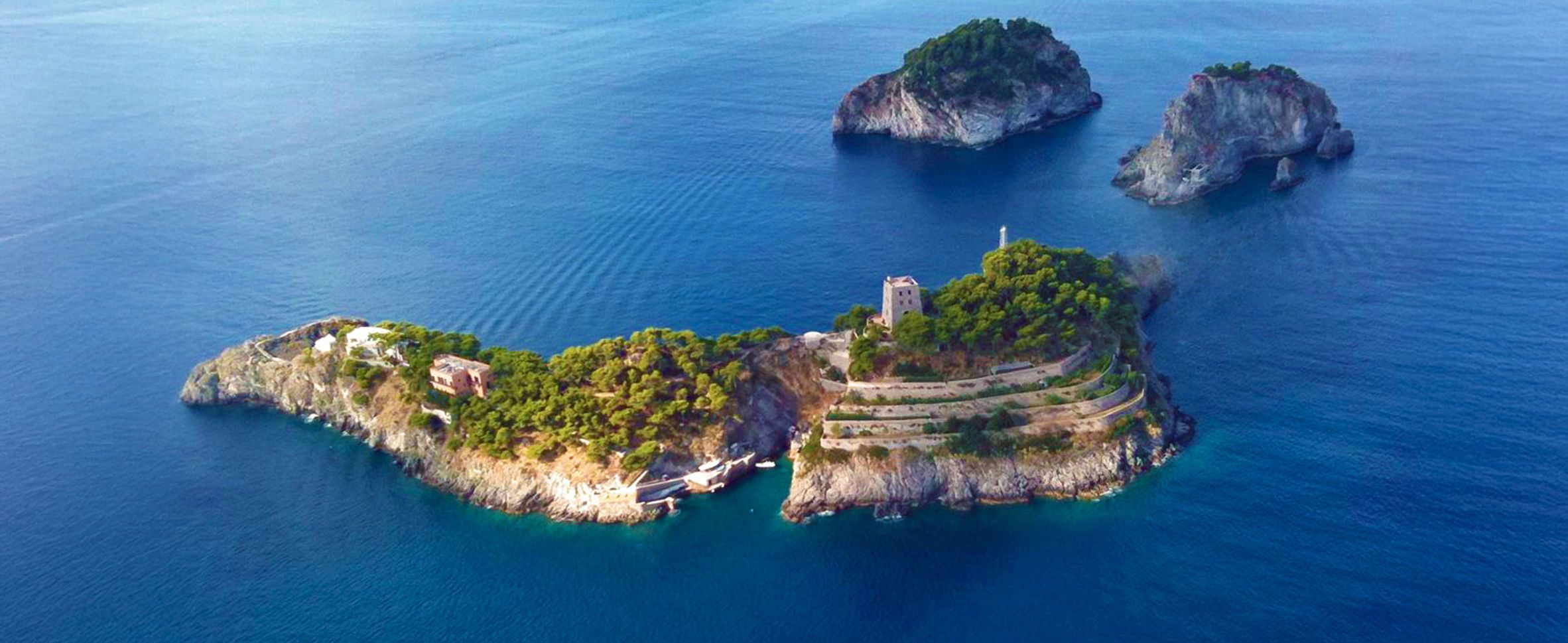
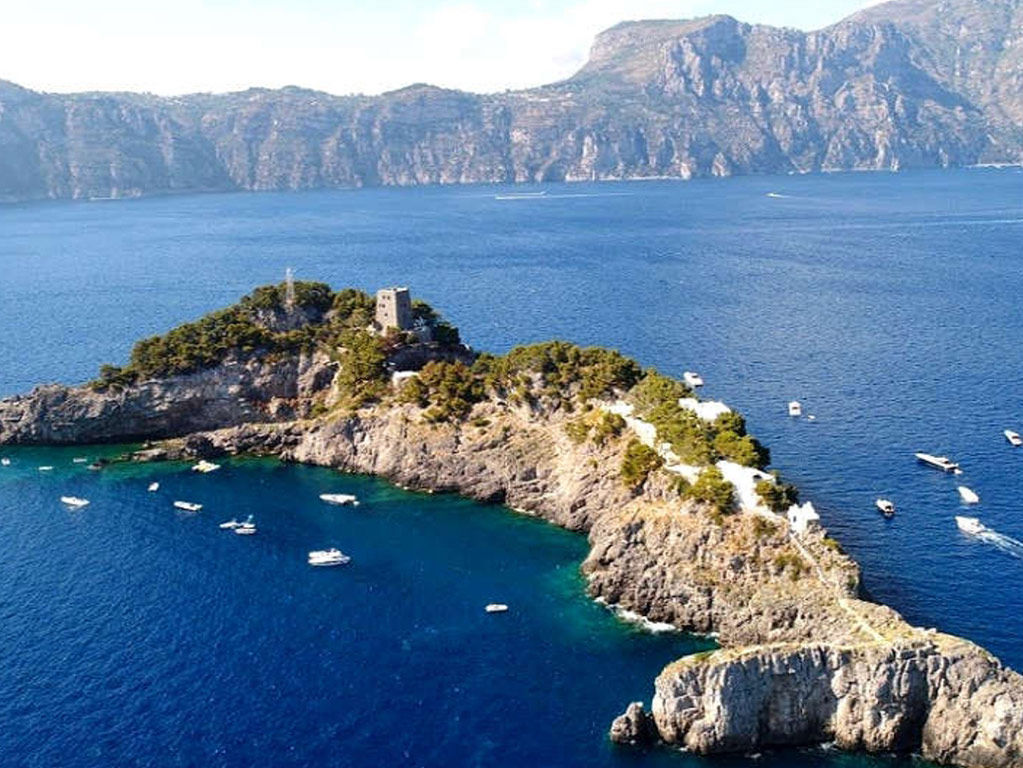
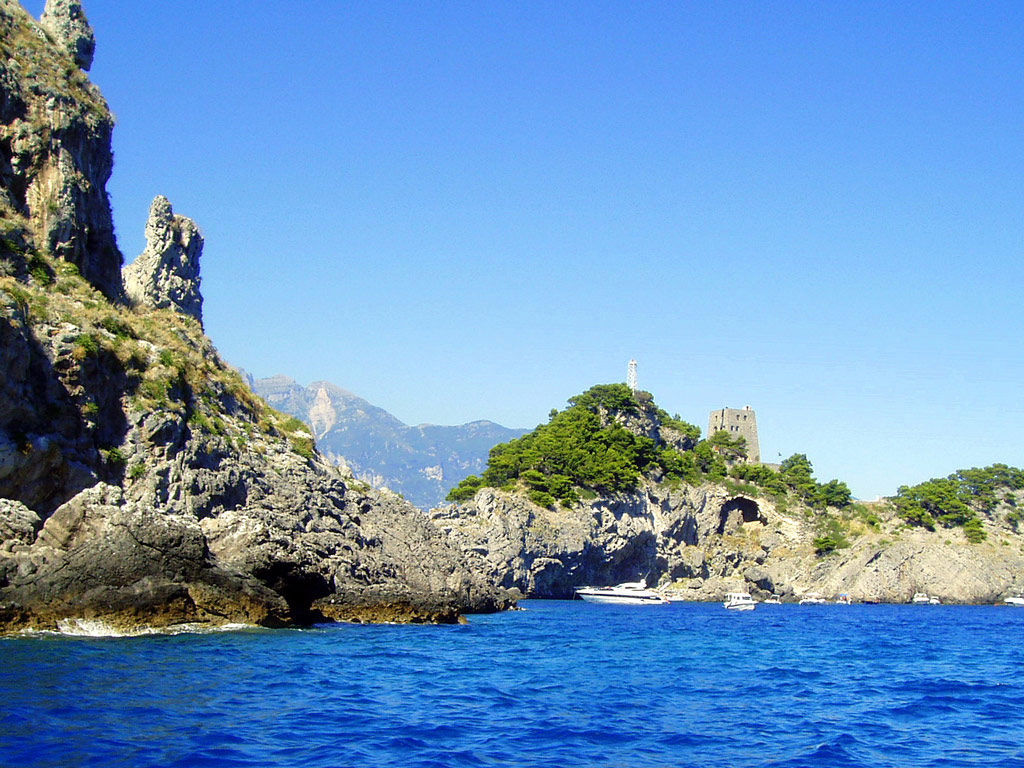
The Li Galli Islands lie approximately 4 kilometres south-west of Positano, in the Tyrrhenian Sea, between the Amalfi Coast and the island of Capri. The archipelago consists of three main islets: Gallo Lungo, the largest — about 400 metres long and shaped, when seen from above, like a dolphin — La Rotonda, a small circular outcrop, and La Castelluccia, also known as the Island of Brigands, because pirates once used it as a lookout point to intercept merchant ships passing through the Bocche di Capri strait.
Together with the tiny islet of Isca and the rocky spur of Vetara, they form the Li Galli archipelago, which is included within the Punta Campanella Marine Protected Area. The surrounding waters are exceptionally clear — in some spots, the seabed is visible to the naked eye — and are home to dolphins, sea bream, and the remnants of ancient Roman shipwrecks, including amphorae that still lie undisturbed on the seabed.
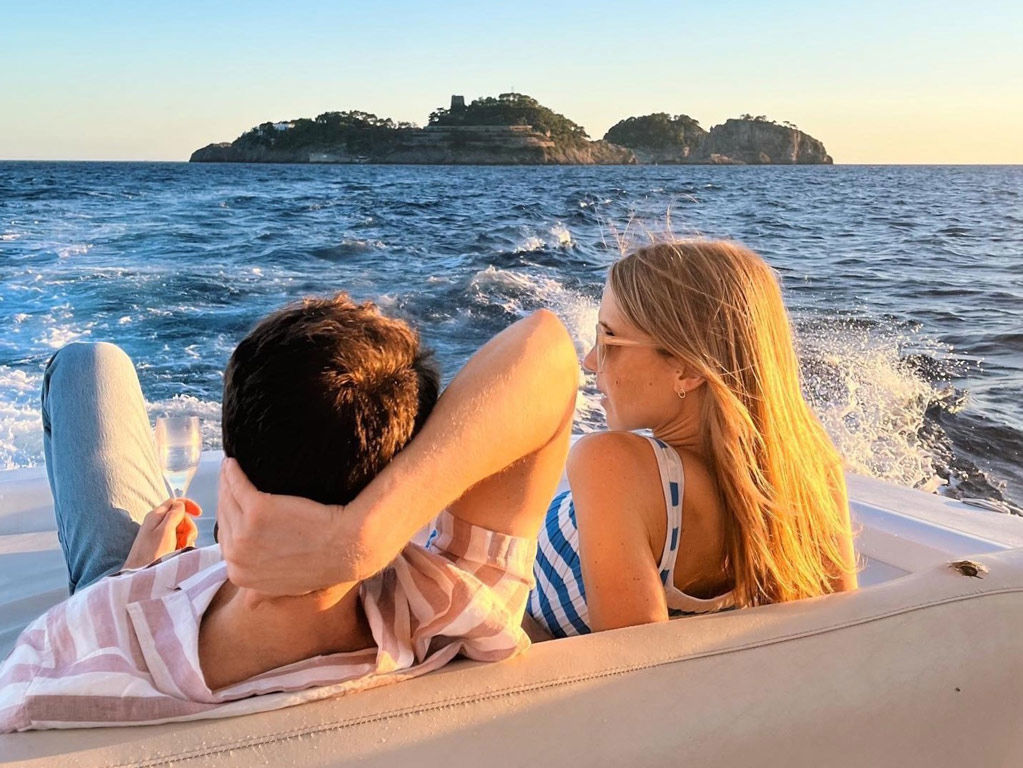
On a clear day, all three islets are visible from Positano's Spiaggia Grande, floating on the horizon. They are close enough to feel reachable, and far enough to feel mysterious.
The islands have two names, and understanding both requires a small lesson in ancient mythology. The older name — Le Sirenuse — was recorded by the Greek geographer Strabo in the first century BC. In his Geographica, Strabo identified these islands as the home of the Sirens, calling them Sirenai or Sirenussai. This name survived in medieval documents: in 1225, the Holy Roman Emperor Frederick II donated the islands to the Benedictine monastery of Santa Maria of Positano, describing them as 'tres Sirenas quae dicitur Gallus' — 'three Sirens, which are called Gallus'.
The modern name Li Galli — literally 'The Chickens', or roosters — is a mocking reference to the Sirens' original form. In ancient Greece, the Sirens were not depicted as the mermaids of popular imagination: they were half-woman, half-bird, and their feathered appearance is what gave the islands their sardonic modern name. Only in the Middle Ages did the Siren gradually acquire a fish's tail, as classical mythology merged with northern European legends of the sea.
The story of the Sirens is one of the most enduring episodes in the entire Odyssey. Sailing home from the Trojan War, Ulysses is warned by the sorceress Circe that his route will take him past islands where the Sirens dwell — creatures whose song is so beautiful, so irresistible, that every sailor who hears it forgets everything else and steers directly towards his own death on the rocks below.
Circe's advice is practical and precise. Ulysses fills his crew's ears with beeswax so that none of them can hear the song. But Ulysses himself wants to hear it — he orders his men to tie him to the mast of the ship before they approach, with instructions not to release him no matter what he says or how he begs. And so the ship passes the islands. The Sirens sing. Ulysses strains against the ropes with all his strength, desperate to go to them. But the ropes hold, the crew rows on, and they pass through.
The myth records that when Ulysses escaped, the humiliated Sirens threw themselves into the sea. According to one tradition, their bodies washed ashore at different points along the Tyrrhenian coast — Parthenope's body reached the Gulf of Naples, and a city grew up around her tomb. That city was first called Parthenope, and then Naples. To this day, partenopeo is an Italian word meaning 'Neapolitan'.
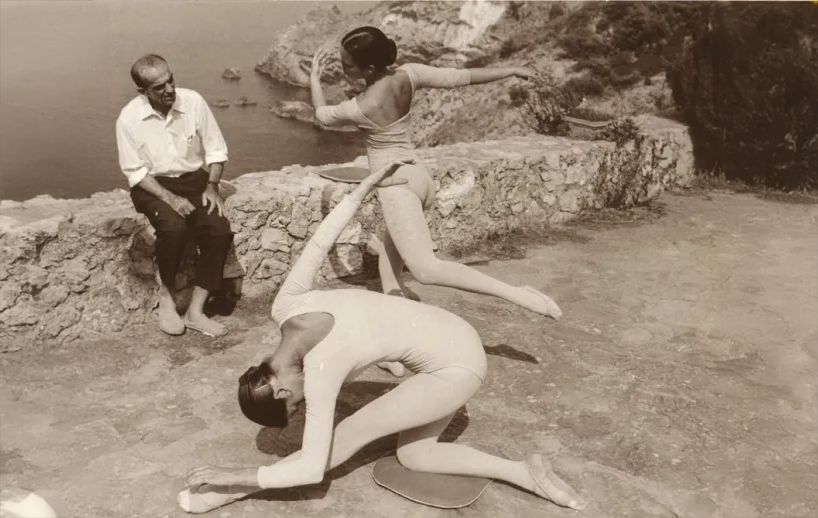
For centuries after antiquity, the Li Galli Islands remained largely uninhabited, used occasionally for hunting and briefly as a rabbit farm — which was destroyed by a storm in 1873. Then, in April 1917, a young Russian choreographer named Léonide Massine arrived in Naples with Sergei Diaghilev and the Ballets Russes to perform at the Teatro San Carlo. From the boat, he saw the islands. Seven years later, in 1924, he bought them.
Massine paid 300,000 lire for the archipelago — a considerable sum at the time — and set about transforming Gallo Lungo into the kind of retreat that only a dancer and visionary could conceive. He converted the old Aragonese watchtower (built in the 15th century to defend against Saracen raids) into a residence with a dance studio and an outdoor theatre modelled on the ancient theatre of Syracuse. He then enlisted his friend, the Swiss-French architect Le Corbusier, to design a villa on the site of the original Roman structure and to add a panoramic terrace overlooking Capri's Faraglioni.
For Massine, the island was not a luxury escape but a source of creative necessity. 'An occasion to get away from the smothering materialism of our societies and rediscover the beauty of nature,' he once said. Over the decades, the islands welcomed an extraordinary procession of artists, intellectuals, and celebrities — including Anna Magnani, Ingrid Bergman, and Franco Zeffirelli — who came to find on the Li Galli the same thing Massine had found: a place where the world fell away.
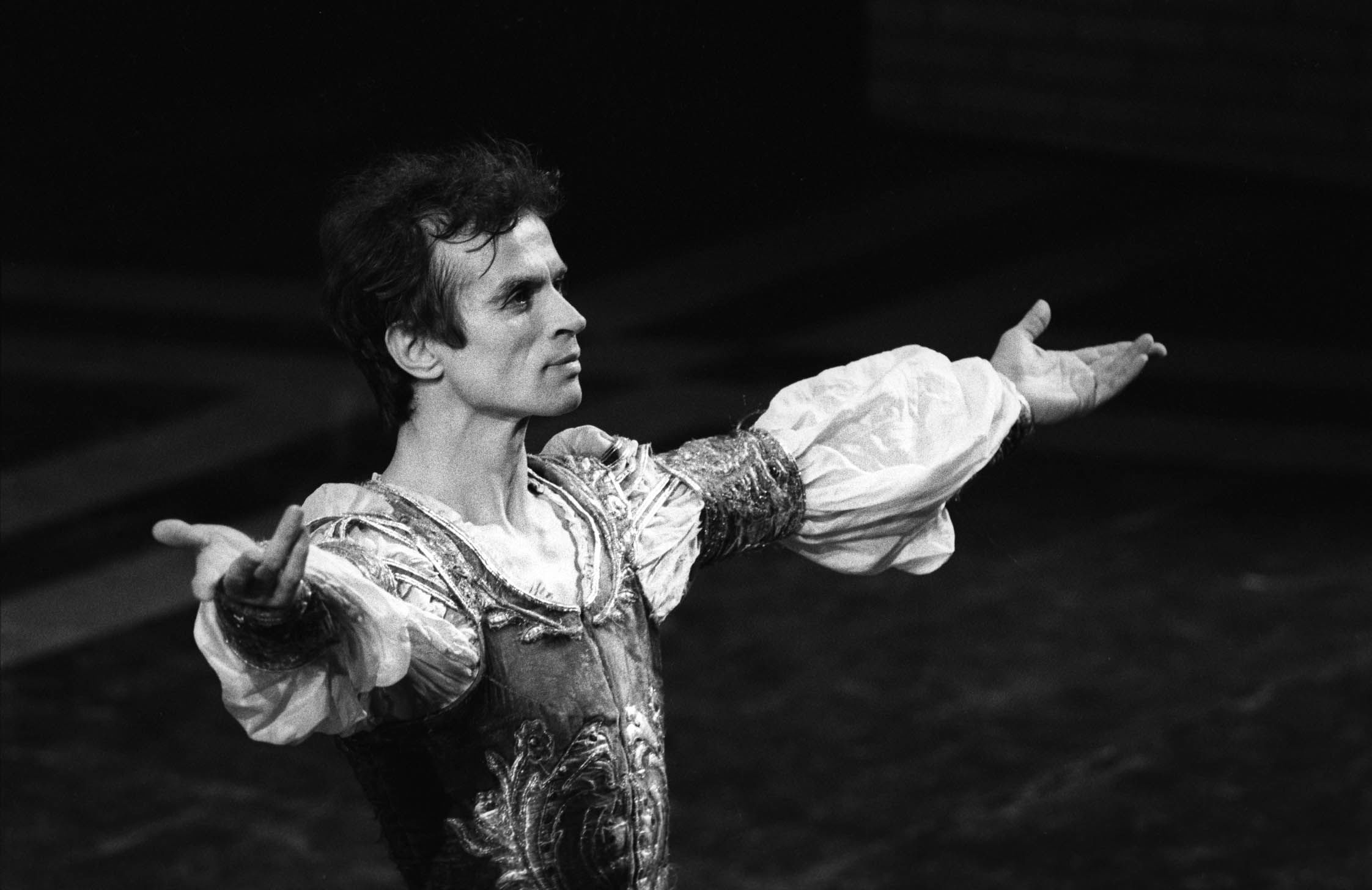
In 1988, following Massine's death, the Li Galli Islands passed to Rudolf Nureyev — perhaps the greatest male ballet dancer of the twentieth century, and a man for whom beauty, drama, and solitude were equally necessary. Nureyev had first seen the islands years earlier and had never forgotten them.
During his years on Gallo Lungo, Nureyev transformed the villa according to his own eclectic vision: Moorish mosaics, Turkish and Andalusian tiles, a mirrored dance studio with red pine parquet where he continued to practise even as his health began to fail. He hosted Sophia Loren on the islands. Jacqueline Kennedy came with Aristotle Onassis. Steven Spielberg arrived by boat. The guest list reads like a survey of the twentieth century's most celebrated lives.
On the 3rd of September 1992, aware that his illness was worsening, Nureyev left Li Galli for the last time. A plaque on the island still records the moment: 'Cloaked in splendour and theatrical glory, he used to walk every day with steady or fleeting steps on his way to and from these shores to his island of Li Galli.' He died on 6 January 1993. The islands were subsequently acquired by Giovanni Russo, a Sorrento hotelier, who manages them as a private luxury estate today.
The Li Galli Islands are privately owned and closed to visitors on foot. But from the sea, they reveal everything. The approach by boat — watching the three islets grow from dark shapes on the horizon into extraordinary formations of rock and Mediterranean vegetation, with the white villa of Gallo Lungo visible above the tree line — is one of the most memorable journeys on the entire coast.
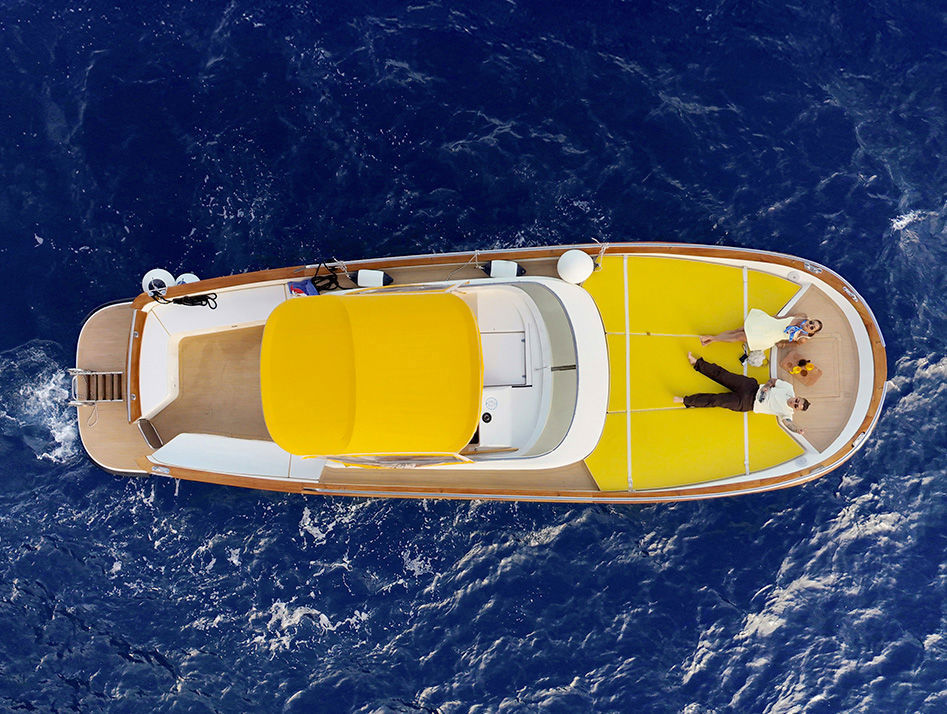
At Positano Boats, the Li Galli Islands are a feature stop on several of our tours. The sunset cruise from Positano times the crossing to arrive at the islands during the golden hour, when the light is warm and the sea takes on the colours that painters have tried to capture for centuries. Private charters allow you to anchor off the islands, swim in the protected waters of the marine reserve, and spend as long as you wish in a place that feels genuinely, mythically remote.
→ La Vita è Bella Honeymoon Experience — Sunset stop at the Li Galli Islands included
→ Happy Sunset from Positano — Li Galli Islands at golden hour
→ Amalfi Coast Private Experience — Full-day tour passing the Li Galli Islands
→ All Private Tours — Customise your Li Galli experience
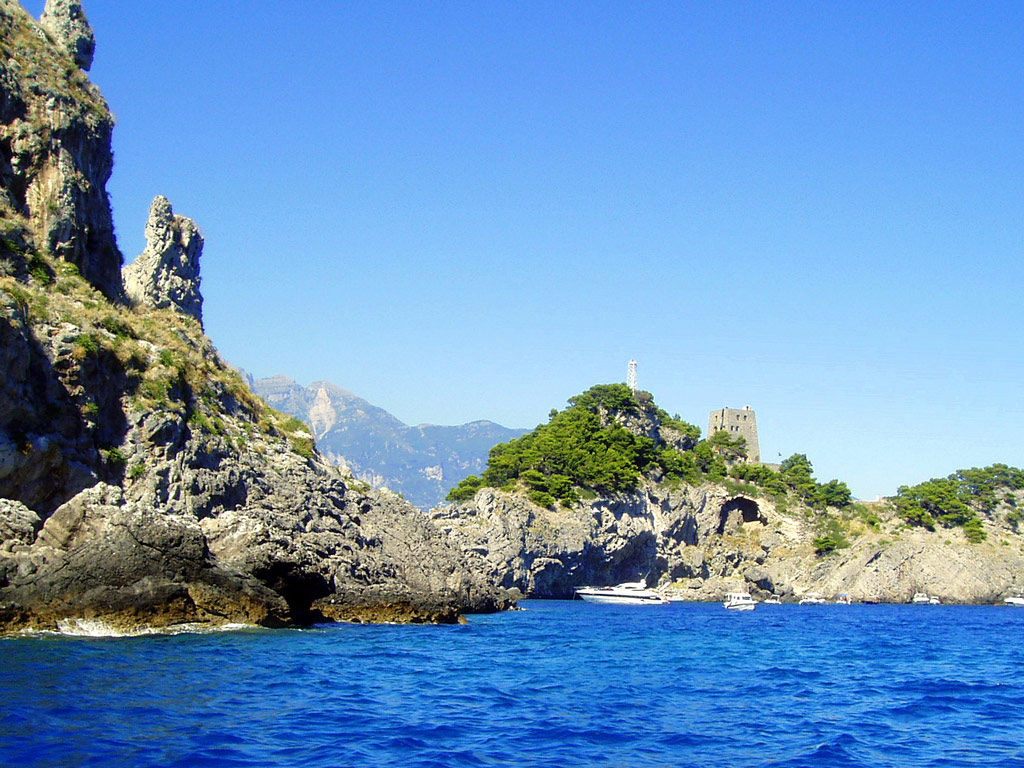
The Li Galli Islands — also known as Le Sirenuse — are a small archipelago of three islets between Positano and Capri on the Amalfi Coast, Province of Salerno, Italy. The three islets are Gallo Lungo (the largest, about 400 metres long), La Rotonda, and La Castelluccia, also known as the Island of Brigands. They are part of the Punta Campanella Marine Protected Area and are privately owned.
The name Li Galli means 'The Chickens' (or roosters) in Italian, and refers to the ancient Greek depiction of the Sirens as half-woman, half-bird creatures — not as mermaids, as popular culture later portrayed them. In antiquity, the islands were known as Sirenai or Sirenussai, a name first recorded by the Greek geographer Strabo in the first century BC. The modern name is a mocking reference to the Sirens' feathered appearance.
The Li Galli Islands are privately owned and are not open to the public on foot. However, the best way to experience them is by private boat from Positano, which allows you to circle all three islets, swim in the crystal-clear waters of the Punta Campanella Marine Protected Area, and admire the famous villa from the sea. Positano Boats includes the Li Galli Islands as a highlight stop on several tours.
The Li Galli Islands were famously owned by Russian choreographer Léonide Massine from 1924 and later by ballet dancer Rudolf Nureyev, who purchased them in 1988 and left them for the last time in September 1992, shortly before his death in January 1993. The islands were subsequently acquired by Giovanni Russo, a Sorrento-based hotelier, who manages them as an exclusive private estate today.
The Li Galli Islands are approximately 4 kilometres south-west of Positano. By private boat from the Spiaggia Grande, the crossing takes between 15 and 20 minutes, depending on sea conditions. On a clear day, all three islets are visible from Positano's beach, floating on the horizon between the coast and Capri.
In Homer's Odyssey, the hero Ulysses must sail past the Sirens — mythical creatures whose irresistible song lures sailors to their doom. Following the advice of the sorceress Circe, Ulysses fills his crew's ears with beeswax and has himself tied to the mast so he can hear the song without steering the ship towards the rocks. The islands identified by ancient geographers as the Sirens' home are the Li Galli Islands, called Sirenussai by Strabo in the first century BC.